8min read
Content
,
Podcast Production
For most of the last decade, the question a business asked before starting a podcast was simply whether to start one at all. In 2026, that question has changed. The businesses seriously considering a show are no longer asking whether to podcast. They are asking whether to record it as audio only, or to shoot it as video from the first episode. It is a bigger decision than it looks, because it shapes the equipment you need, the studio you book, the budget you set, and, most importantly, how many people will ever actually find the show.
The short version is that the market has moved, and it has moved toward video. But the reasons matter more than the headline, because video done poorly can work against a brand in a way that audio never does. Understanding why video is winning, and what separates video worth publishing from video worth hiding, is the difference between a show that builds a business and one that quietly costs it.
WHAT ACTUALLY CHANGED
The shift is not a matter of taste. It is a matter of where people now discover podcasts. For years, a podcast lived inside a podcast app, found by people who already went looking for podcasts. That is a small and slow way to grow. Today, the largest rooms for podcast discovery are not podcast apps at all. They are video and social platforms, where a show is found by people who were not looking for it, pulled in by a moment rather than a subscription.
YouTube has become one of the most used destinations for podcasts in the world, and it is a video platform first. Spotify, historically an audio company, has spent the last few years building video into the core of its podcast experience and actively favouring shows that publish it. And the short vertical clip, the thirty to ninety second moment lifted from a longer conversation, has become the single most effective way a new listener stumbles onto a show. Every one of those discovery paths rewards video. An audio only show can still exist on them, but it turns up as a static waveform or a cover image, competing for attention against motion, faces, and expression. It rarely wins that competition.
So the businesses choosing video are not chasing a trend. They are following their audience to where discovery now happens.
WHAT VIDEO DOES FOR A BRAND THAT AUDIO CANNOT
Discovery is the practical reason. Trust is the strategic one. A conversation you can see lands differently from one you can only hear. Viewers read faces, body language, and the small human signals that tell them whether the person speaking is credible and worth their time. For a business using a podcast to build authority, that visible credibility is much of the point. A founder explaining how they think, a specialist walking through a problem, a client speaking openly about their experience, these are far more persuasive when the audience can watch them happen.
Video also changes the economics of a single recording. An audio conversation produces one asset, the episode. A well shot video conversation produces many. The full episode lives on YouTube and in podcast apps. The best few minutes become clips for LinkedIn, Instagram, and TikTok. Stills from the session become imagery for a newsletter or a landing page. Behind the scenes footage becomes proof that the brand invests in how it shows up. One booked session, filmed properly, can feed a content calendar for weeks. Audio simply cannot be reformatted the same way, because there is nothing to watch.
For a business, this is where video stops being a production choice and becomes a marketing one. You are not paying for a video podcast. You are paying for a library of content, of which the episode is only the largest piece.
THE CATCH NOBODY MENTIONS
Here is the part that gets left out of most encouraging articles about video. Video done badly is worse than audio done well. A poorly lit room, a single locked off camera, mismatched audio, and guests who clearly do not know where to look will make a brand look less capable, not more. Audiences are fluent in production quality now, whether or not they could name what is wrong. They know within seconds whether something looks considered or looks cheap, and they extend that judgement to the business behind it.
This is the real reason video is a bigger decision than a checkbox. Choosing video is choosing a higher production bar, and meeting that bar is not something a business should improvise. It is the difference between a phone on a tripod and a proper multicam set up, and the audience can tell.
WHAT PRODUCING VIDEO WELL ACTUALLY REQUIRES
Video worth publishing depends on a handful of things working together, and skipping any one of them shows.
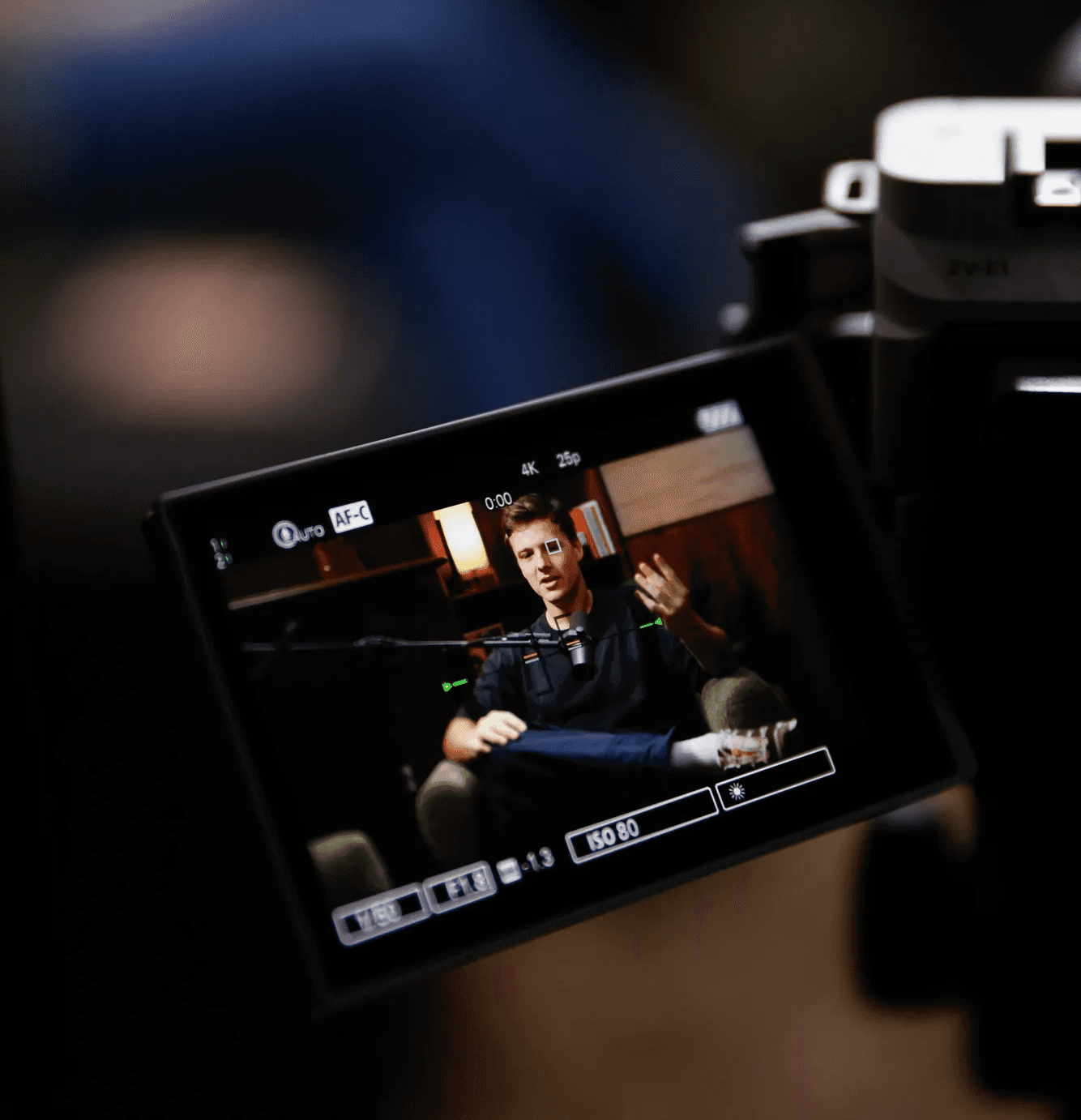
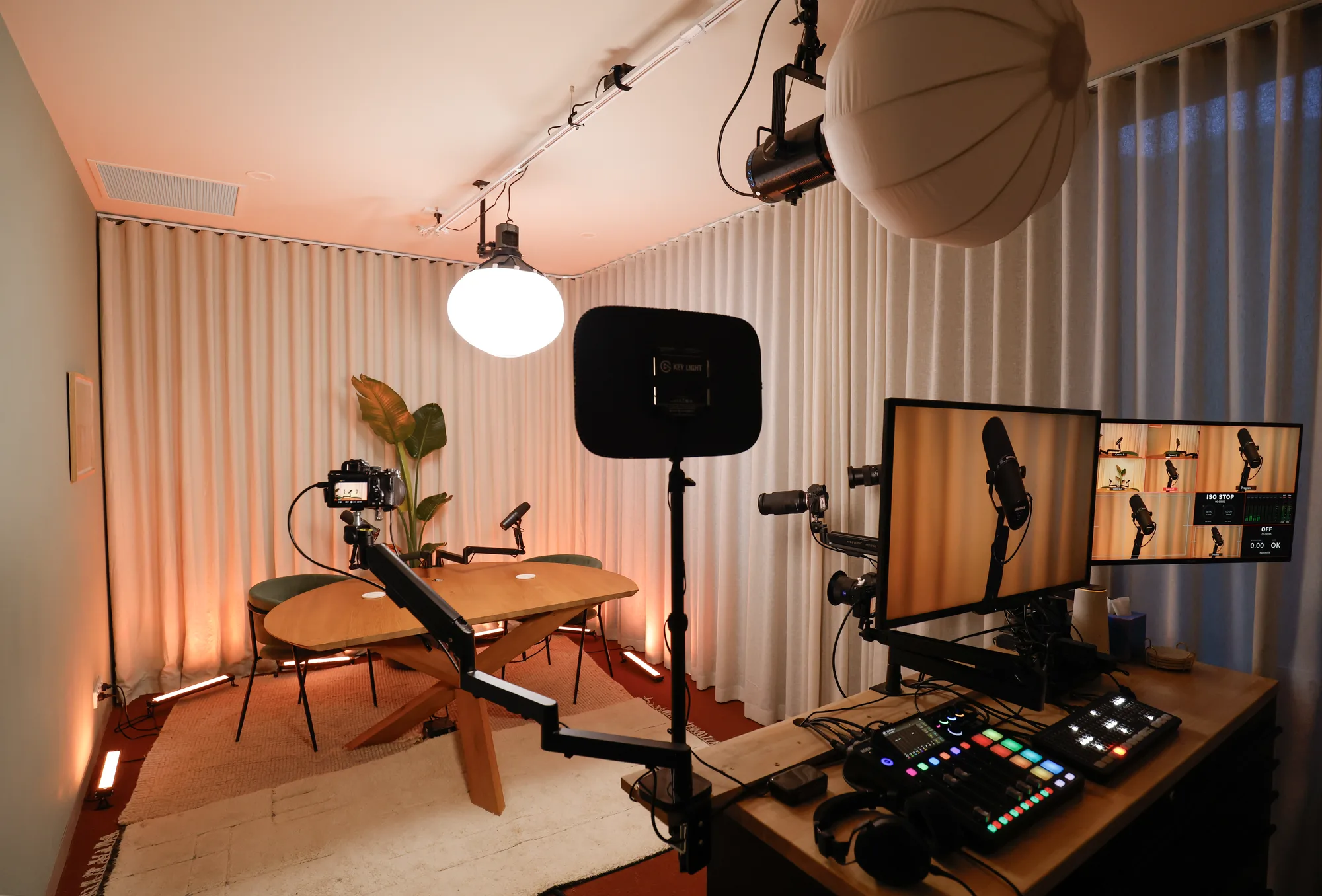
The first is more than one camera. A single angle on a conversation grows tiring quickly, and it removes the editor’s ability to cut, to react, to hold on a listener while another person speaks. Multiple cameras, switched live or in the edit, are what make a video conversation feel like something made rather than merely captured. In our own studios, sessions are recorded across up to four cameras, with our producer switching between them live during the session, so the finished multicam file already feels directed rather than flat.
The second is light. Good lighting is the single biggest visible difference between professional and amateur video, and it is the thing untrained setups get wrong most often. Faces need to be lit deliberately, not left to whatever the room happens to provide.
The third is sound, which is easy to forget precisely because it is a video decision. A video podcast is still listened to as much as watched, often in the background, and nothing makes a polished picture fall apart faster than thin or echoing audio. Broadcast microphones, a treated room, and an engineer processing the sound properly are not optional extras on a video shoot. They are what stop the video from undermining itself.
The fourth is direction. Someone in the room whose job is to watch the conversation, guide it, notice when a moment landed and when it needs another take, and keep guests relaxed enough to be themselves. This is the least visible ingredient and often the most important, because the best footage in the world cannot rescue a conversation that never got going.
None of this requires a business to own any of it. It requires a business to book a studio that already has all of it, set up and running before anyone arrives.
WHEN AUDIO ONLY STILL MAKES SENSE
Video is winning, but it is not the only right answer. There are genuine cases where audio only is the better call. Internal shows made for a known audience that does not need discovery. Highly sensitive conversations where a camera would change what people are willing to say. Formats built deliberately around intimacy and imagination, where the absence of picture is the point. And early experiments where a business genuinely wants to test whether it can sustain a publishing rhythm before investing in the higher production video demands.
The honest guidance is this. If the goal is growth, authority, and reach, video is now the default, and audio only is the exception that needs a reason. If the goal is something narrower and more private, audio can be exactly right. What no business should do is choose audio only to save money and then expect video style growth, because the two do not connect.
HOW TO DECIDE
The clearest way to make the call is to ask what the show is for. If it exists to be found by new audiences, to build public credibility, and to feed social channels, it needs to be video, and it needs to be video produced to a standard that flatters the brand rather than exposing it. If it exists for a small, known, private audience and discovery is not the point, audio can serve it well and cost less.
Most businesses, once they answer that honestly, land on video. The follow on question is not whether, but how to produce it well without building a production team in house, and that comes down to the studio and the partner behind it. For a sense of what each tier of production actually costs, our guide to podcast production costs in Australia breaks the numbers down properly.
If you are weighing audio against video for your own show, the fastest way to understand the difference is to stand in a room built for it. Come and see one of our studios, and we will talk it through in person.
— On The Record
"Stop asking what a podcast costs, and start asking what you want it to do. Once you're clear on that, the budget isn't a hurdle. It's just a decision, and it's yours to make."
· Continue reading
More from the desk


New articles, fortnightly.
Production insights and studio craft, direct to your inbox. Straight from the studio.